Monthly Archives: October 2008

Credit crunch hits close to home

With only two payments left on my credit card debt, it’s time to get serious about paying down my ridiculous private student loan debt.

For the past year, I’ve been working hard to claw my way out of leftover debt from college. My first goal was to focus on my high-interest credit card debt. I can’t tell you how thankful I am that we’re almost completely credit-card-debt free just as the financial world is crumbling.

After paying down credit card debt, my next goal is high-interest private student loan debt. My plan was to lower my 8-12% interest rate by consolidating my high-interest private student loans at today’s lower rates. I planned to attack those loans for the next three years until only our low-interest federal debt was left.

I’ve been keeping an eye on two separate lenders for private loan consolidation: CitiBank and Chase. Since it takes about 6 weeks for processing and my forbearance period ends at the end of December, it’s now time for me to apply for these consolidation loans.

Last night I logged into CitiBank’s website to find out what information I would need to gather to apply this week. Unfortunately, it appears that CitiBank has stopped offering this type of loan in the past two weeks. I guess it’s not surprising, but it’s certainly disappointing.

Private student loan consolidation is still listed as an option on the Chase student loan web site. However their information hasn’t been updated since June. It’s highly possible that they’re no longer accepting new applications either. Sigh.

My credit score is excellent, so I’m hoping I’ll be able to find a company that’s still offering private student loan consolidation. Unfortunately, my timing couldn’t be worse. I need to find a lender before December at pretty much one of the worst times in history to get a loan. With lenders cracking down even on credit limits, this type of high-risk private student loan consolidation seems to be next to impossible to get even for people with high credit scores.

We’re currently devoting $325 a month to debt. Without consolidating to a lower interest rate, my monthly payment is about $300. Luckily, we have enough money in our budget to cover the payment as is, but I was hoping to cut our minimum monthly payment in half. If our minimum payment was only $160 and we continued to send $325+ every month, it would greatly reduce the amount of time it took to pay down the debt. If we could gradually raise that amount to $500 a month, we could pay off $20,000 in about three years.

Obviously, things could be much worse. Even if we have to keep the high interest rate for a little longer, we’re still better off than we were a year ago with $4,000 in credit card debt.

I’m grateful that we’re able to make ends meet and save a little money at the same time even as the financial market crumbles around us. It’s still a bummer. I had lofty goals to pay off my private student loan debt in the next three years. If we can’t get a lower interest rate, then that’s clearly not going to happen.

I’m calling Chase tonight to see if I have any options with them. If not, I’ll call my original lender and see if I can bargain for a lower interest rate. I’m hoping I’ll have some bargaining power thanks to my high credit score, but I’m kind of doubting it. With lenders cutting credit limits and saying “see ya” even to responsible borrowers to reduce their credit risk, I’m thinking they’ll be unlikely to take on a loan like this.

Just goes to show how much harder it is to achieve lofty goals in this crazy financial market …

Subscribe

Slightly off topic odds and ends

First things first: Tony and I finally buckled down and completed our fall cleaning list today. We were a little late (our original goal was to finish by the end of September), but better late than never, right? I also dug all my fall and winter clothes out of storage and boxed up my summer clothes until next year.

Now I just have to stop procrastinating and finally get around to selling the CDs and books we’re getting rid of on eBay or Amazon. Sigh. One goal at a time.

After our intense marathon cleaning session, we celebrated with a matinee. We always see the last matinee of the afternoon because it’s discounted an additional 50 cents. Only $5.25 a ticket!

Now that our apartment is nice and tidy and the fall candles are burning, I’m ready for the cool weather. Anytime now. Here in North Carolina, it’s still about 80 degrees every day. We tried to turn off the air conditioning last week. I wanted so badly to just open the windows. No go. The temperature climbed to a humid 90s degrees in our third floor apartment. Sigh. Another two weeks of air conditioning for us it seems.

Finally, on a blog-related note, I’m planning to switch from WordPress hosting to another service so I can have more control over my template. I want to make the switch over Thanksgiving weekend so I’ll have a big block of time to devote to making the switch and ironing out the kinks.

Right now I’m doing some research and looking for a good deal on a reliable hosting service. Anybody have any recommendations for me? I just need basic but reliable hosting, WordPress ready, and I’m hoping to pay about $5 a month. Am I dreaming?

Now I’m off to enjoy turkey meatloaf and mashed potatoes. Yum! My apologies for this rambling, all over the place post. It’s just been one of those days.

An argument for frugality in the face of hard economic times

I’ve been mulling over the article I read in Seattle’s paper last week that suggested frugality might be bad for the economy. So I’m fascinated by this essay from last week’s Time that insists the opposite: Real Patriots Don’t Spend.

The author asserts that America, like all great societies, was built on the idea of thrift. Also like most great societies, Americans have thrown the idea of frugality out the window for the modern consumer culture:

Somewhere along the way, THRIFT did not just stop being a value; it became a folly. Saving was for suckers; you’d miss the ride, die leaving money on the table when you could have lived it up. There are no pockets in a shroud, as the saying goes. We once saved about 15% of our income. By the roaring ’80s the rate was 4%; now we’re in negative numbers.

This idea is particularly poignant to me, as I find myself constantly explaining to astounded co-workers why my husband and I share a car, or why I’d rather eat leftovers during my lunch hour than go out to a restaurant.

Anyway, just thought I’d pass it along. Frugality might not be to blame for the recession. Whew. That’s a relief.

Menu Plan Monday & Grocery Round Up: 10/11-10/17

Is it really the middle of October already? Wow.

We had a great week at the grocery store, which is good for us considering that this week has completely blown our food budget. We’re going to have to keep things tight at the grocery store for the rest of the month to reduce the impact.

This week we stayed within budget with a total of about $56. That includes five pounds of chicken bought at the lowest price I’ve seen per pound at any of our grocery stores ($1.99/lb). As I’ve said before, we use a lot of chicken, so we like to stock up with a few pounds when it’s on sale at that price. I was expecting the bulk chicken purchase to put us over $60 for the week. It didn’t. Yay!

I’m in the mood for some fall cooking this week, so we’re trying a couple of hearty meals. We’re combining these new fall recipes with some old, inexpensive standbys to keep our meals simple and our costs lower. Here’s our menu plan for the week:

Saturday: Homemade pizza (We’re having it tonight instead of yesterday because we went out to eat for my birthday last night.)
Sunday: Turkey meatloaf and mashed potatoes
Monday: Pasta with butternut squash
Tuesday: Sandwiches/leftovers
Wednesday: BLTs with oven fries

Thursday: Herb roasted chicken breasts & roasted potatoes
Friday: Homemade pizza

I’m excited to try the turkey meatloaf and butternut squash pasta! I’ll let you know how it turns out!

Now head over to OrgJunkie for more meal plan inspiration!

Overcoming birthday & vacation spending mode

I apologize for my absence yesterday and most of this week. We’ve spent the week recovering from a wonderful but exhausting trip to Seattle, and yesterday we celebrated my 24th birthday with some sushi and gift card shopping.

Our trip has thrown off our budget considerably. It’s not because we overspent on the trip. Thanks to the generosity of my sister, who was a very gracious hostess, and my parents, we didn’t spend much at all. My sister and brother-in-law even treated us to a very fancy (and delicious) meal in the city for our birthdays.

As a thank you, we awoke early one morning and went to the grocery store to pick up ingredients for apple cinnamon pancakes and cooked breakfast for everyone Sunday morning. Other than that, we spent very little on the trip aside from a couple of quick airport meals.

This is good news, as we didn’t have much to spend from our vacation budget after buying plane tickets, boarding our dog, parking the car at the airport, and paying for gas to drive 2 hours each way to the airport. Our total vacation spending ended up being about $600 including all travel expenses. We’d been saving for it over the past few months, and factored a little cushion into this month’s budget, so the vacation itself didn’t throw us off too much.

However, we’ve been struggling all week to get out of vacation mode and get back on track. It seems that the casual vacation attitude seeps into our daily life every time we leave town. This happened after our honeymoon, too. Our spending inhibitions lower on vacation, and we come back home and can’t seem to get back on track.

We’ve had three meals out this week alone (including sushi for my birthday last night). We also spent my gift card on some new work clothes and Tony bought a new pair of shoes with some money he received for his birthday two weeks ago.

All of this is fine with me. I’m happy to use birthday money on practical things like clothes and shoes. Our food budget is probably shot due to several meals out in the airport and for my birthday, but I can live with that.

The question is, how do we get back on track now? As a former spending addict, it’s hard to shut off the valve once I’ve started overspending. Not to mention, I hate watching all that money come out of our bank account, even though it was put there specifically to use for birthday gifts.

Sigh.

What about you? Do you have trouble getting your spending back on track after a vacation?

Could frugality be bad for the economy?

While visiting my sister and her family in Seattle over the weekend, I saw an article in the paper that surprised me: Frugal consumers hurt economy, too. In summary, consumers have been spending less all year, but the past two weeks have seen a major drop-off in consumer spending. They’re expecting even less spending in the fourth quarter. Partly to blame, the article says, are fearful consumers. As they spend less, the economy slows even more, leading to a consumer-driven recession.

Is consumer fear and less spending driving this crisis? Maybe so. But I disagree with the reporter’s use of the word “frugal.” To me, frugality is a long term lifestyle, not a temporary reaction to a bad economy. Overall, I can’t see how frugality could be bad for the economy in the long run.

In my short experience with frugal living, I’ve become incredibly empowered when it comes to my financial future. With adequate savings and smart financial choices, I don’t have to let the crazy market dictate my spending. I can take a trip across the country in the middle of this financial chaos, because I know I’ve saved for it.

According to this article, increased spending is better for the economy. But isn’t overspending what got us into this mess? If reduced spending and a slowed economy are caused by fear, then couldn’t you make the argument that if all consumers made smart choices, saved adequately, and spent only what they could afford to spend, then market forces couldn’t lead to a consumer-driven recession? If nobody is financially insecure, then an erratic market wouldn’t have this effect on spending, would it?

I don’t claim to be an economist. I just can’t imagine that the solution to the country’s financial problems is increased spending at retail stores and restaurants. Yes, in the short run the decreased spending is slowing the economy, but in the long run, if we spent less and saved more, wouldn’t that make our economy stronger? It would certainly make us more financially secure.

I also realize that I’m talking about a perfect world here — one that doesn’t exist. The truth is that a lot of people live paycheck to paycheck, and when the market fluctuates like this, they realize that they don’t have enough to cover rising prices or carry them through in the event of a job loss. The consequence is a sudden decrease in spending that is felt throughout the economy.

In my opinion, the article got it wrong. It’s not the people who live frugally and save that hurt the economy. Frugal people are generally pretty secure in their finances, and in my experience their spending remains pretty consistent. They may not spend a lot, but they spend consistently. After all, consistent spending and budgeting are synonymous with frugal living.

It’s financial insecurity that leads to this type of wild fluctuation in the economy, and frugality generally doesn’t equal insecurity.

Am I completely off base here? What do you think?

Subscribe

Budget weddings: You don’t have to skip the honeymoon

With Tony in grad school and me working part-time, we could barely afford to pay our bills let alone go on an extravagant vacation right after the wedding. We decided to put the honeymoon off for a couple years until after he graduated. We’d save now, then we’d go on a big vacation later.

The more we thought about it, though, the more we realized that you can’t really recreate the honeymoon two years later. We wanted that special time to just be together and marvel at the fact that we were actually married. You don’t have to go to an expensive resort on a secluded beach to get that feeling, though. It doesn’t matter where you go.

Here are some tips we used to plan a romantic adventure for under $1,000.

Stay close to home.

You don’t have to travel across the world and spend thousands on plane tickets. Just choose someplace that neither you or your spouse has ever been. Experiencing it together for the first time will make it extra special. We chose Washington D.C. because we’d never been there, and our new home is only a 6-hour drive from the nation’s capital.

Drive, don’t fly.

Even if your destination is a bit of a drive from home, it’s often cheaper to drive than fly, especially if your car is fuel efficient. We had to travel to Indiana for the wedding and then to Washington for the honeymoon. Flying would have involved three expensive one-way tickets for each of us. Because our car gets 35 miles to the gallon on the highway, we only spent $200 on gas to drive about 1800 miles.

Don’t forget to factor hotels into the overall cost if your destination is too far to drive in one day. Remember, though, when you’re honeymooning, the drive is part of the adventure.

Choose your destination wisely.

What kind of traveler are you and your future spouse? Are you looking for a relaxing beach getaway with no stress, or do you like to sight-see and stay moving on vacation? Choose a destination that will suit both of your travel styles.

My husband and I are sight-seers, and a beach vacation sounded boring to us. Washington D.C. was perfect because we love museums and historic sites.

Other frugal destinations include:

North and South Carolina’s Beaches – If you live on the East Coast and you’re looking for a beach vacation close to home, the Carolinas offer resort beaches at lower prices. Check out Myrtle Beach, SC or the Outer Banks in North Carolina.

Mountain Getaways –
If you both love the outdoors, consider a secluded mountain cabin or camping trip to reconnect with nature and each other.

Cruise to Nowhere –
If you’re desperate to spend your honeymoon on a cruise,  “cruises to nowhere” (with no port stops) or cruises with just one stop are a very cheap option. You can spend a few nights at sea with all the luxuries of a cruise ship for a fraction of the cost.

Road Trip –
Tony and I considered this option, and ultimately decided we’d have more fun in D.C. But a honeymoon road trip is a good way to see a lot of sights without spending a lot. Stay in cheap bed and breakfasts in off-the-map locations to reduce hotel costs. We still want to plan this kind of trip through New England before we move away from the East Coast.

Stay away from tourist traps.

Keep expenses in mind when you’re looking at things to do in your prospective destinations. Vegas might not be the best option for a honeymoon on a budget because you really have to spend money to have fun there. Remember, spending inhibitions are particularly low on vacation, so do some research and try to choose a place with a lot of fun, frugal activities that will keep you busy without tempting you to spend money.

Washington D.C. was the perfect frugal destination. None of the museums, monuments, or historic sites that we visited charged an admission fee, so we spent next to nothing on attractions.

Bring groceries.

Eating out is one of the biggest money drains on any vacation. Tony and I found a wonderful hotel in Georgetown that offered suites with full kitchens so we could cook some meals in the hotel room. Scout out a grocery store in the area and stock up on food when you arrive. If you cut your food budget by cooking in the hotel, you won’t have to feel guilty about splurging on a couple really nice meals.

Don’t forget to mention you’re on your honeymoon.

You shouldn’t bank on this when planning, but make sure you let people know you’re honeymooning. Many times people will go out of their way to make your travel experience extra special if they know you’re newlyweds. We even received a free upgrade to a luxury suite at our hotel (worth an extra $75 a night) when they found out it was our honeymoon. Even if they don’t offer upgrades, you’ll still get some nice well wishes. :)

If you have to board your pets, don’t take the budget route

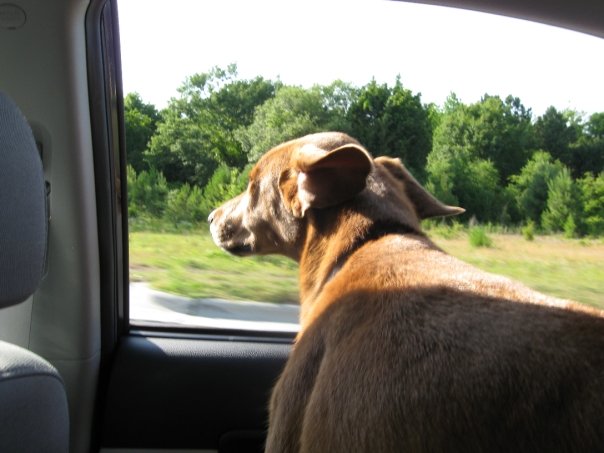
Our beloved Dachshund/Lab mix, Howie, has been in a kennel all weekend. :( No, I don’t like boarding him. Unfortunately, we don’t have close friends here who we’re comfortable asking to shoulder the burden of pet-sitting. He’s well behaved, but very hyper. Our solution is to budget Howie’s boarding fees in with our vacation budget.

This is one area where I don’t look for the cheapest option. The truth is, if your boarding facility is reputable, you’ll pay more for personal care. The more personal care they provide the animals, the more staff they need. They also must have better facilities, which are more costly to maintain. If those are the things you’re paying for, then it’s absolutely worth it to pay extra to board your pet.

We boarded Howie for the first time during the week of our wedding. He wasn’t quite a year old, and I was very uncomfortable with the idea.

I don’t expect our dog to be pampered with doggie massages and treats four times a day (though that’s not far off from what he gets at home), but I do expect the people whom I’m entrusting with his care to treat him humanely and kindly. I’ve heard horror stories about understaffed boarding facilities abusing and neglecting animals. Even facilities considered humane often leave the animals in small cages 24 hours a day. I hate the idea of animal cruelty period, and I certainly don’t want my own pet to be mistreated. The thought of putting Howie in a cage for that long with no room to stretch his legs broke my heart.

We researched extensively before choosing a boarding facility. After looking at reviews, asking other pet owners in the area for recommendations, and touring the facility, we chose a place that charges $23 a night. That includes 4 hours of morning play time and 2 hours of afternoon play time in a yard with all of the other dogs. For a social dog like Howie who loves the dog park, this is ideal.

On the tour, we were looking for a few things. First, we checked the play area. The dogs in the yard all seemed friendly and social. I wanted to make sure they were keeping aggressive dogs separate. Indeed, the owner showed us a separate play yard where staffers play with dogs that don’t play well with other dogs.

We also looked in the kennels where the dogs sleep. Dogs stay there, so I didn’t expect it to smell like roses. However, excessive bad odors could be a warning sign that the kennels aren’t maintained well or cleaned after messes. That’s not only uncomfortable, but unsanitary. I also looked at the kennels to make sure they were large enough to comfortably hold the dogs.

When choosing a boarding facility, pay attention to their policies on vaccinations and vet care. Our boarding facility must have current vet records on dogs before they can stay. When I called to make a reservation for this weekend, they even reminded me that Howie was due for several shots before he would be welcome. Their records were so up to date that they knew the dates when he was due for his shots. That’s important if you don’t want to bring a sick dog home.

If you’re considering boarding a social dog, I suggest finding a facility that offers several hours of daily playtime.

They even gave us a free half-day pass to let Howie play in the dog area for a few hours before our trip. This was good for us because we’d never boarded him, and we wanted to know how he’d react to being dropped off in a strange environment. He loved it. When we picked him up, he was exhausted and filthy from rolling around in the dirt with other dogs. I’d rather give him a bath when we get home than pick up a clean dog who’s been caged.

We ended up paying almost $250 in boarding fees while we were away for our wedding and honeymoon. We’ll pay a little under $100 for this weekend. Obviously, the ideal is to leave your pet with a loving family member or friend for little or no money. When that isn’t an option, it’s worth it to pay top dollar for good care.

You may have more money in your travel budget than you think

The casual vacation mentality makes it easy to forget your spending inhibitions. That’s why it’s more crucial than ever to create and maintain a travel budget for trips, no matter how short they are.

Obviously, you shouldn’t take fun trips that you can’t afford. If you’re heading out for a vacation, you’ve hopefully been saving for some time. You should have a set amount that you can spend outside your regular budget.

Our travel budgets usually include set figures for airline tickets or gas, food, transportation (for cabs, buses, trains, car rental, etc. in the place we’re visiting), hotel, and entertainment.

Due to the hospitality of my sister and her family (thanks Mary!), our travel budget for this trip is very small. We’re staying with them, so we won’t be paying for a hotel. Our food costs will also be much lower than they would be if we were eating out three meals a day. We also won’t need to rent a car. As you can see, this particular trip will be relatively inexpensive aside from the plane tickets, but we still know exactly how much we can spend without going over budget.

I figure out how much I can spend based on what we’ve saved for the trip, but there’s something missing from these numbers, though. What about the money from our regular budget that we won’t be spending since we’ll be away from home?

If you’re leaving for a week, that’s 25% of your monthly budget for a number of expenses that you won’t be spending while you’re away. You won’t be going to the grocery store that week, so that’s a fourth of your monthly grocery budget that you won’t use. If you make sure all your appliances are unplugged (except for the refrigerator, of course) and your air conditioner is off, then you’ll also see a decrease in your electric bill for the month. You can also plan on saving a week’s worth of gas or other transportation costs. Depending on your personal expenses, you may be saving on other things while you’re away from home.

To figure out how much you’re saving on your monthly budget while you’re away, just take a look at your budget. Divide the number of days you’ll be gone by 30. This is the percentage you can subtract from weekly expenses such as food, gas, and entertainment.

I just did the math for us, and almost $100 of our regular budget will be saved during our four-day weekend away from home. That’s a pretty substantial chunk of change in addition to the money we’ve already saved for the trip.

You don’t necessarily have to tack this extra money onto your vacation budget. You might choose to use it as a snowflake to pay down debt or kick start your savings for your next vacation. Regardless of what you choose to do with it, it’s important that you account for it. When money isn’t properly accounted for, it may end up being wasted.

We typically add some, if not all, to our vacation budget. We’ll need food and transportation on vacation, too, so why not put this money toward that? Of course, we’ll spend more than normal for these expenses on the road, which is why it’s so important to have enough vacation money saved to cover these costs.

In this  particular case, we’re spending about $100 to board Howie while we’re gone. I like to think our regular budget money is going toward his super-nice kennel since all of our vacation costs are covered. :)