Monthly Archives: December 2008

Think a month ahead to save time & money

Each week, I plan a menu and a to-do list. In an attempt to reduce stress and plan ahead for the holidays (including a 2,000-mile road trip), I decided to try monthly planning.

In addition to using Mint to plan a zero-based budget based on our income (which I do every month), I also mapped out a month’s worth of meals, a pre-holiday/vacation to-do list, and I’m still working on planning a month’s worth of blog posts.

Using Notepad, I saved three documents on my computer desktop last weekend: December budget, December menu, and December blog schedule.

When it comes to my blog, I’m not so good at planning ahead. Between my full-time job, spending time with my husband, and home management, the blog typically takes a back seat. It’s not uncommon for me to sit down to write the next day’s blog post with absolutely no idea what I’m going to write.

This month, I’ve been pushing myself to stay ahead of the game. Not only am I attempting to plan ahead for blog post ideas, but I’ve been writing more on the weekends and scheduling posts ahead of time.

I have to say, monthly planning has made my life a lot easier.

In the past, I’ve tried similar planning using calendars and date books. For some reason, these simple little Notepad documents have worked better than anything I’ve ever tried. Maybe it’s because I spend so much time in front of my computer, or maybe it’s because they’re so incredibly simplified, like a little electronic Post-it note.

I finished my budget and menu plan last weekend. Even though my blog post schedule isn’t finished, I have a head start on the month’s posts. Most importantly, I have a place to put those ideas that randomly spring into my head.

My premature new year’s resolution is to keep it up. I tried this method to make the holidays easier, but I can see how it could save me tons of time and money the rest of the year, too.

Having a monthly menu plan has made it easier to take advantage of grocery sales on nonperishables. For example, we’re making vegetable beef stew in two weeks, so when we found beef stock on sale for 50 cents a can last week, we picked up four cans. It saved us $2.

In the future, I plan to use the previous month’s menu plans to simplify my planning process even further. Because we have many favorites that we like to make over and over, I can refer to old menu plans when I need ideas for the next month’s meals.

My monthly to-do list has made it easier to manage my time. I know what I need to finish each week, so I won’t end up with a million things to do the week before we leave town.

It’s also made my weekend a lot more enjoyable. I didn’t feel stressed Saturday morning before grocery shopping, because I knew our menu plan was already finished. I also didn’t feel rushed or guilty thinking about what I should be doing. My to-do list dictated a few tasks I needed to finish to stay on track. Once they were done, I was free to relax.

I can’t wait to perfect this monthly planning process to maximize my savings and productivity. That definitely works for me.
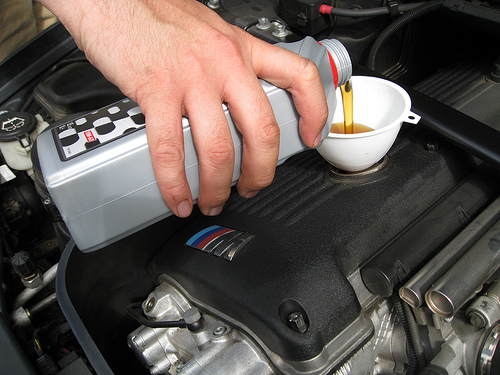
Save now for car maintenance & repairs

Photo by jeffwilcox

Tony and I share a single car. It’s only about two years old, and we bought it brand new. Because we have just one, and we plan to drive it for at least 10 years if we can, it’s particularly important that we take good care of it.

This month is going to be a big one for car expenses. Not only do we owe $90 for our yearly county auto tax, but we’re also taking a 2,000-mile road trip to see family for the holidays. To prepare for the trip, we’re getting the oil changed a little early and having our fluids and tires checked to make sure everything is in top shape.

The grand total will be about $140. A year ago I would have been stressed to have such a large expense added on to our Christmas shopping spending and travel expenses. Not this month, though.

Last summer, we began saving $25 a month in a special car savings account. We have about $135 in the account now, so we only have to spend $5 out of our regular budget to pay our taxes and keep our car running smoothly for the trip.

Because it’s a relatively new car and it’s still under warranty, $25 a month is enough for us to pay for routine maintenance. However, as the car gets older, we’ll need to save more. Once the warranty is up, we want to have a good chunk of change saved to cover more expensive maintenance as well as repairs.

Yes, a car problem would certainly fall under the realm of acceptable uses for our emergency fund. But if we can anticipate regular maintenance and scheduled repairs (such as new tires, brakes, and other incidentals), we won’t have to dip into our emergency fund.

I don’t even miss $25 a month since it’s deducted at the beginning of each month, but having that money there when we needed it has made our holiday season a lot less stressful.

We keep a similar account for “dog maintenance.” (Ha.) This pays for yearly vet appointments, shots, and flea and heartworm prevention medicines. We only pay for this stuff once a year, but deducting money from our budget each month is so much easier than coming up with the money in one lump sum every year.

Other uses for these types of advance planning savings accounts include haircuts, birthday/Christmas gifts, out of pocket medical expenses (if your insurance provider doesn’t offer a tax-free HSA), and any other yearly expenses.

If you’d like to start a savings account for your own regular yearly expenses, here’s my advice:

  • Use ING Direct (email me for a referral link if you haven’t opened an account yet, and you’ll get a $25 bonus if your first deposit is $250 or more.) ING makes it extremely simple to maintain separate accounts, and you’ll earn a decent interest rate (right now 2.75%).
  • Figure out how much you need to save each month to cover the total amount you’ll need for the year. For example, we get our oil changed about 2-3 times a year. If we were saving for oil changes only, we’d need about $90 a year, or $7.50 a month. Because we also save for taxes and we’re trying to build a surplus to carry over to next year, we save $25 a month.
  • If you’re worried about working it into your budget, start small. Gradually increase the amount by small increments until you’re saving enough to cover your expenses.
  • Don’t touch the money! It helps me to consider that money already spent, as if oil changes are a monthly expense instead of only every few months. That $25 a month has already been “spent” on car expenses, so it’s off limits. Then when it’s time to spend it, I just move it over from savings to my checking account.

I confess, I’m not always frugal

Every month I’m learning more about saving and frugality. I freely admit, though, that I’m not as frugal as I could be. Not by a long shot. There are plenty of choices that I make that aren’t the most frugal, but I continue to make them anyway. Some of them are out of convenience, others compromise. Some are simply weaknesses that I’m continually trying to improve on. Here are my worst offenses:

Paper towels

I use dish rags and cloths for a lot of things, but sometimes I just want a paper towel for particularly tough messes. I don’t like keeping dirty or wet rags around the kitchen, so if I was going to switch to completely reusable rags, I’d be washing them constantly. Sometimes it’s just easier to use a paper towel. Of course, I use coupons to buy them, I always look for sales, and I try to keep my use to a minimum. That’s my frugal compromise.

Cable television

We don’t spend a lot of money on entertainment or meals out. The compromise? We spring for cable television with DVR. It’s expensive at about $60 a month, but it certainly makes it easier to stay home instead of going out and spending money.

Brand Names

For most things, I don’t mind buying the generic version to save money. But there are some items (including paper towels, dog food, laundry detergent and shampoo) that I spring for the brand name. In my experimentation, I’ve discovered that I really can tell a difference. Most of the time I can’t tell a difference between brand names and their generic counterparts, but if there’s a considerable quality difference, then I’ll spend a little more for the better product.

Food

The grocery store has always been our top weakness. We’ve worked really hard to cut our grocery spending down from $80-$90 a week to about $55-$60 a week. I wanted to cut it to $40 a week, but I found it to be too much of a struggle. So to make things easy on us, I decided to cut myself some slack. Somehow we still manage to go over budget on food every month, so this is definitely an area that I continue to work on. But I’ve stopped being quite so hard on myself about our failures. Every week is a learning experience.

I’m still working on doing better, and I continue to improve. But there are some things (like cable and paper towels) that I may never give up. Frugality is as much about compromise as it is about saving, so I try to keep a balance.

Do you have any frugal weaknesses?

Menu Plan & Grocery Round Up: 12/6-12/12

I’m just going to come out and say it: I love monthly menu planning. Shopping this week was so simple. We already knew what we needed, and even bought some of it last week. That freed up some of our budget to spend on sale items to use in coming weeks. I think we might continue planning monthly instead of weekly from now on.

Our spending isn’t lower (we still spent about $55 this week which is pretty average for us), but planning for the month has saved us a lot of time and hassle.

As you may remember from my post’s last weekend, this month we’re on a food & financial diet. Monthly menu planning is part of that, but we’re also trying to eat healthier without spending more money.

Here’s our menu plan for the week:

Saturday: Sandwiches
Sunday: Grilled tilapia fillets and squash
Monday: Chicken and rice soup
Tuesday: Grilled chicken salad
Wednesday: Garlic chicken with broccoli and cheddar
Thursday: Chicken wraps
Friday: Bean and cheese burritos (recipe below)

Bean and Cheese burritos (from the Better Homes & Gardens cookbook)

8-inch tortillas
1 cup chopped onion
1 tbsp. cooking oil
16 oz. fat-free refried beans
Shredded lowfat cheese
Shredded lettuce
Salsa

Saute onion in oil until tender. Add refried beans. Heat through. Fill warmed tortillas with 1/4 cup beans, and cheese. Roll up and bake in 350-degree oven about 10 minutes until heated through. Serve with lettuce and salsa.

Check out OrgJunkie for more menu plans.

Favorite frugal holiday traditions from childhood

Photo by yogi

Tony and I have only been married six months, so we’re still working on building our own family traditions. While some of our own traditions are completely new (like our private gift exchange and candle lit dinner at home a few days before celebrating the actual holiday with family), many of them are borrowed and adapted from our families.

We’ve been thinking a lot about which traditions we’ve to carried over from our own childhoods. Here are some of our favorites, and the ways we’ve adapted them.

Then: Every year, I watched old Christmas movies with my mom (“It’s a Wonderful Life,” “White Christmas,” and “The Bishop’s Wife” were our favorites).

Now: Tony and I still watch “It’s a Wonderful Life” every year. We’ve also added “Love Actually” to our list of holiday favorites. This year, we’re attending a free screening of “It’s a Wonderful Life” in an old theater downtown, so we’ll get to see it on the big screen.

Then: Tony listened to a local radio station’s frequent on Santa’s whereabouts Christmas Eve.

Now: Well, not right now, but someday when we have kids we’ll track Santa with them online at a site like Norad’s Santa Tracker.

Then: Both of our mothers baked huge trays of Christmas cookies for us to eat every year.

Now: I don’t trust myself with large amounts of cookies around the house, so if I bake I’ll give away most of the cookies to co-workers or family.

Photo by ggladman

Then: We both grew up in the Midwest where there was plenty of snow for snowmen, sledding, and snowball fights.

Now: No snow in North Carolina. :( We’re heading north for Christmas, though, and we’re hoping to see snow then. Cross your fingers for us!

Then: When I was a kid, we opened one gift on Christmas Eve and the rest in the morning. Once we were all too old to wait up for Santa, we began exchanging gifts at midnight on Christmas Eve. We celebrated all evening by eating good food, listening to Christmas music, and playing board games. Tony’s family has always exchanged gifts on Christmas morning.

Now: We’ll celebrate on Christmas Eve until we have young children who are expecting Santa. But as they get older, we’ll probably abandon the Christmas morning gift exchange for a Christmas Eve celebration. As a teenager, I loved celebrating with my family on Christmas Eve then sleeping in on Christmas morning and relaxing all day.

Then: My mom always put an orange in the bottom of our stockings. It was a nice healthy snack that didn’t at all make up for the pounds of junk food we ate at Christmas. But it was a nice touch.

Now: I will always put oranges in stockings, no matter how weird Tony thinks it is. :)

What about you? How have you adapted your family’s traditions?

TGIF Round Up: Holiday Countdown Edition

I can’t believe we’re down to 3 weeks until Christmas! Time has been flying by.

The decorations are up, most of my shopping is done, and our plans are all set for our trip to see family. I just can’t believe how soon it’s coming. Despite the fact that everything’s pretty much done, I’m still feeling pretty unprepared for the holidays this year. Like they snuck up on me. Anyone else feel that way?

Tonight we’re going to a holiday party. I’m looking forward to getting all dressed up and enjoying some holiday cheer. :)

And onto my favorites from my reader this week:

  • Emily at Remodeling this Life is slowing down this holiday season. I absolutely agree with her. We’re all so stressed during the holidays, but it should really be the time to slow down and enjoy ourselves.
  • Christina at Northern Cheapskate shares how you can be generous even if you’re broke. It’s really important this time of year to remember that even when you’re struggling, it’s still important to help others.
  • Get Rich Slowly shows how to afford anything (but not everything). It’s so easy to get blinded by all the things we want, that sometimes we forget how easy it could be to get one thing with a little focus and effort.
  • On Simplicity offers alternatives to traditional gift giving. In the economy, we should all be thinking outside the box for ways to make the people we love feel special without spending a lot of money.

Hope you’re all enjoying the holiday season so far. Happy Friday!

What would we do in a financial emergency?

Yesterday Kacie at Sense to Save wrote about what she would do in a financial worse case scenario like a job loss or sudden medical expenses. I’ve actually been thinking about this a lot lately. Unfortunately, an acquaintance’s husband recently lost his job, and it made me wonder if we’d be prepared for a similar situation.

Our emergency fund is nowhere near complete. We actually only have enough to cover us for about a month and a half. Yikes. But we’ve only been working on it for about four months, and we plan to make it a top priority in the coming year.

Obviously, just as Kacie suggested in her post, the first thing to go would be discretionary expenses (cable, entertainment, cell phone extras, etc.) Our budget is pretty bare bones already, but cutting discretionary spending would probably free up $250 or so max. That’s easy enough.

But what if that wasn’t enough? What then? I think it’s important not just to have a plan for financial emergency, but also a plan for financial catastrophe.

For us, it would mean putting my student loans back into forbearance (a lender-approved pause in repayment that wouldn’t negatively affect my credit score, but still leads to interest accrual). That would free up another $200.

Next we would consider downsizing to a smaller apartment. We currently live in a 2-bedroom because we like the extra space (a 1-bedroom can get a little cramped with two people and a dog). We considered downsizing last summer, but then our landlord offered to renegotiate our lease and lower our rent. We decided it wasn’t worth it after we crunched the numbers (including a $300 loss for nonrefundable security deposits) and considered the hassle of moving and living in a smaller apartment.

In an emergency we might try to get out of our lease or find a subletter. Moving to a smaller apartment could save us another $200 a month.

Until we have a 6-month emergency fund in place I consider it a priority, but if we had to choose between saving and eating, I’d be willing to cut back temporarily.

With all of those expenses cut, we could reduce our spending by about $1000 a month. Wow, that would make a huge difference. Of course, it would be uncomfortable. But there’s no room in the budget for comfort in times of extreme hardship, is there?

Finally, in the event of an extreme emergency, Tony would drop out of grad school and find a full time job. He’s currently paid a stipend to teach, but it’s much less than he’d make in a full time job (if he could find one in this economy).

We might even consider packing up and moving back home where we have a support network. That would be an absolute last resort if we had no other options. Tony only has about 18 months left in his program, so I’m hoping nothing too extreme happens before he finishes. :)

How about you? What’s your plan for financial emergency?

Online or in-store shopping: which is more frugal?

Photo by engnr_chik

Who doesn’t love online shopping? It’s fast, convenient, and often offers lower prices. But it’s not always the most frugal way to shop.

I bought all of my nieces’ and nephews’ Christmas gifts through Amazon. They were shipped right to my door, and I did all of the shopping right from my couch. It doesn’t get more convenient than that.

But what happens if one of them already has the gift? What if it’s defective or they just don’t like it? In the past, I loved including gift receipts with any and all gifts. There’s no way to include a gift receipt with gifts purchased online.

It’s also easy to overlook shipping costs when shopping for online deals. Sure, the item itself might be $5 cheaper than in stores, but you’re not saving money if you’re paying $6 to ship it.

Time is another important factor. Are you shopping at the last minute? If so, it’s best not to risk holiday shipping delays for a few bucks off.

Shopping online may be more convenient overall, but it requires extra research and care.

Compare online and in-store prices, and be sure to factor in shipping costs when shopping for the best deal.

Consider the likelihood that the gift will need to be returned. For gifts like clothing that must be tried on, it might be worth it to spend a little more in-store so you can include a gift receipt. If it’s an appliance, book, or other item that you know the recipient wants, online shopping is the way to go.

Find out the person’s clothing sizes before you start shopping, and make sure they don’t already have the item you buy.

Because I knew I wouldn’t be able to include a gift receipt, I was extra careful when I shopped for my nieces and nephews. I checked with my sisters to make sure the gifts were a good fit. I also read product reviews to ensure I was buying quality toys that weren’t likely to be defective.

Shipping was free, and I paid for the gifts with an Amazon gift card I received through MyPoints. You can’t get a better deal than free, but if I had been paying out of my pocket, I would have comparison shopped to make sure I was getting the best deal.

In our culture of convenience and technology, it’s very easy to convince yourself that online is always better. Be sure to look at the whole picture before you make a decision, though.

Christmas presents, not status symbols

Over the weekend, Tony and I were picking up a gift card as a Christmas gift for his grandparents. A month ago when we worked out our Christmas budget, we agreed upon an amount that we could afford. But as we stood in line I found myself second guessing our decision. “Do you think this is enough?” I asked him.

This isn’t the first time this has happened. I ask myself that question almost every time I buy a gift. “Is this enough?”

That’s a pretty silly question, though, isn’t it? Enough for what? After all, anybody who would receive a gift only to think it isn’t good enough really doesn’t deserve the gift at all.

Of course I wasn’t worried that Tony’s grandparents would feel that way. They’re probably not expecting anything from us at all, and they’ll be thrilled that we thought of them. So where does this doubt come from?

The more I thought about it, the more I realized that this doubt is more about me than it is about them. I enjoy giving gifts to the people I love because it makes them happy, but the desire to give more than I can afford comes from the same place as the desire to buy fancier things than I can afford.

It’s a tough thing to admit, but in the past I’ve used gift-giving as a status symbol. I’ve charged up credit cards and spent money I didn’t have on gifts. I’m sure the people who love me would be horrified if they knew that buying them gifts was putting me at financial risk. I certainly wouldn’t want anyone to risk their financial security to buy something for me.

I told myself that I was being generous. I wasn’t being generous, though. It was quite the opposite. Buying those fancy gifts made me feel good about giving them. Sure, it made the person who received the gift happy, but that’s not the real reason I was doing it. The people I love would be just as happy with a thoughtful gift that I could afford to give, whether it be something small, homemade, or even baked. The truth is, I liked the way it made me feel to give fancy gifts.

The past couple years have taught me valuable lessons about spending that I’ve learned to apply to gift-giving. Spend only what you can afford, and give only what you can give.

I’m still tempted to break my gift budget, but I have to remind myself that the people who love me would much rather I didn’t risk getting myself into trouble. After all, the safety and financial security of the people I love is much more important to me than receiving Christmas gifts. When I’m tempted to overspend, I remind myself that the people who love me want the same security and safety for me much more than they want presents.

The holiday season is a great time to make the people I love feel special. Spending more than I can afford just isn’t the way to do it.