I’m now 29 weeks pregnant, and officially into the third trimester. In the beginning of my pregnancy, everyone told me I would be amazed at how different pregnancy would be the second time. That hasn’t really been the case for me. I’m struggling with the same aches and pains, nausea, and extreme exhaustion (only this time, I’m anemic, too. Ugh.)
The only big difference for me this time? The time and energy I have to devote to preparing for baby. I wasn’t working for most of my pregnancy with Judah. For half of my pregnancy, Tony was in the process of job hunting, so he wasn’t working either, so I didn’t even really have to take care of myself! I napped, relaxed, and researched baby stuff on the Internet all day while Tony waited on me. Sigh. Those were the days.
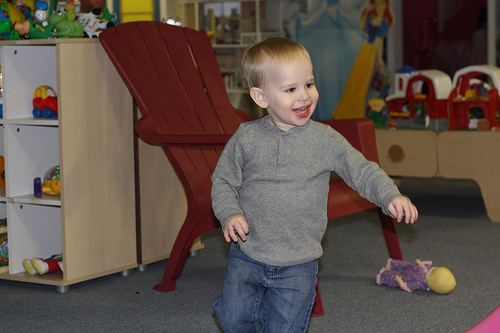
This time, Tony is gone most of the day, and I’m doing the very physical (and exhausting) work of caring for our active, strong-willed 2-year-old. I’ve continued to teach part-time through most of the pregnancy, and I will do so (online) right up until the baby is born and beyond. I’ve been so busy, I haven’t really had time to think about nesting. There’s no chance I’m getting any cleaning or organizing done while Judah is awake, and I’m face planting on my bed within 10 minutes of his bedtime
Now that I’m in the third trimester, the urge to nest has hit me hard. I look around my house, and all I see are to-do lists. I have plenty of plans — but energy and time and motivation are still limited. I’m trying to be realistic about what I can get done.
Preschool is starting in early August for Judah, so I will have three mornings a week to catch up as long as my pregnancy continues to be free of complication (fingers crossed!). For now, I’m trying to prioritize what needs to get done.
Clothes
The great thing about a second child who is the same gender as the first with a relatively close birthday (Judah was born in late November; his brother is due in late September) is that we have a ton of clothes that will likely fit him. I saved everything that was in good shape. We won’t need to buy any clothes, but I do have to get the newborn and 0-3 months clothes out of storage, make sure they’re clean and ready to go, and revamp our clothing storage system. I want to replace Judah’s huge dresser with two smaller ones, stain treat and store the clothing Judah has outgrown (he still has winter stuff in his drawers — eep), and of course, stock baby brother’s drawers with hand-me-downs.
Sleeping Arrangements
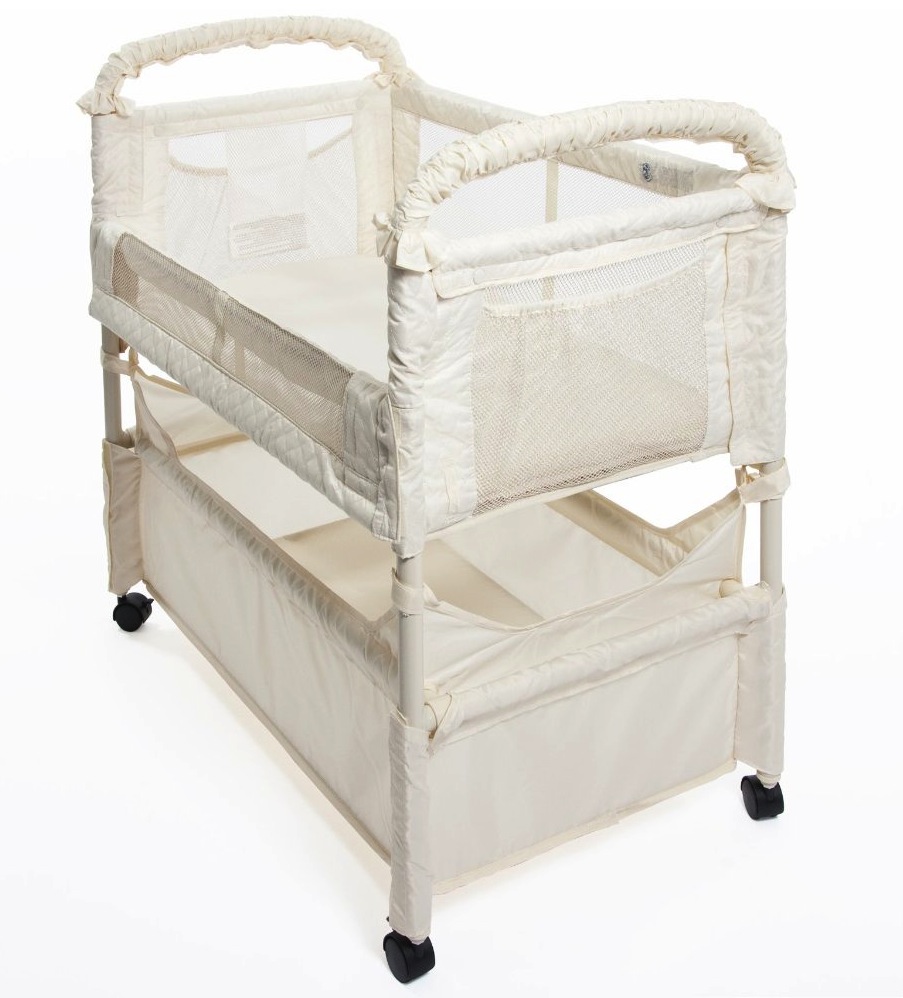
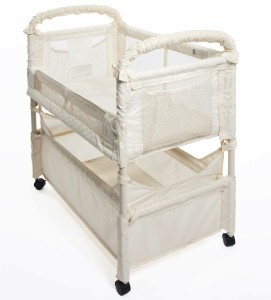 I will be using the same Arm’s Reach Co-Sleeper bassinet that Judah slept in for the first 6 months. Our house is a 3-bedroom, and I’d like to keep a guest room available for family for as long as possible, so I’m resisting the urge to turn our guest room into a full-blown nursery. That doesn’t mean I don’t have a lot to do in there. I will set up a crib, but I’ll probably just leave the guest bed in there, too, since baby won’t need the room all night for another 6 months. It’s been a while since we had visitors, so the room has become an embarrassing depository for old toys and things that don’t have another place. I need to clear it out, clean out the closet (which has served as random storage since we moved in), and make the room functional as both a place to store the baby things and a guest room. We also need to buy a new crib since Judah’s was manufactured before the crib regulations changed, and he pretty much destroyed it by chewing on it (teething rails are on my to-buy list this time).
Diapers
We’ll be cloth diapering for at least the first 12 months again. The beauty of cloth diapering is that pretty much everything can be reused. My diapers are clean and ready to go. I couldn’t resist buying some new covers when Cotton Babies had a seconds sale (50% off for diaper covers with minor imperfections!) So we’re hopefully all set. See this post for more information on my cloth diaper recommendations.
Car seat
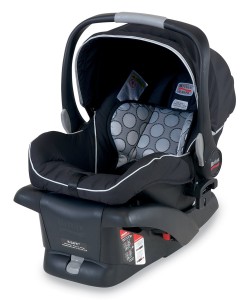 This is the biggest purchase we need to make, and I’m dragging my feet about it. I wasn’t sure if I wanted to get an infant seat carrier or skip straight to a convertible car seat. We had the Chicco KeyFit 30 infant seat for Judah, and I loved it, but it’s so pricey! I can’t reuse that seat because it was involved in a minor car accident, and the manufacturer says their seats are unsafe after any collision, so we’ll need a new seat for this baby. I also didn’t need the high weight limit, because Judah moved into the convertible at 9 months and well under 20 pounds. Even as small as he was, I didn’t use the seat as a carrier for longer than a few weeks, because the whole thing was just too heavy and I preferred my Baby K’Tan and later my Ergobaby carrier. Even in the winter, I just jumped in the backseat, secured him in the carrier, and wrapped us both up in my old maternity coat. It was so much easier than hauling that giant seat around.
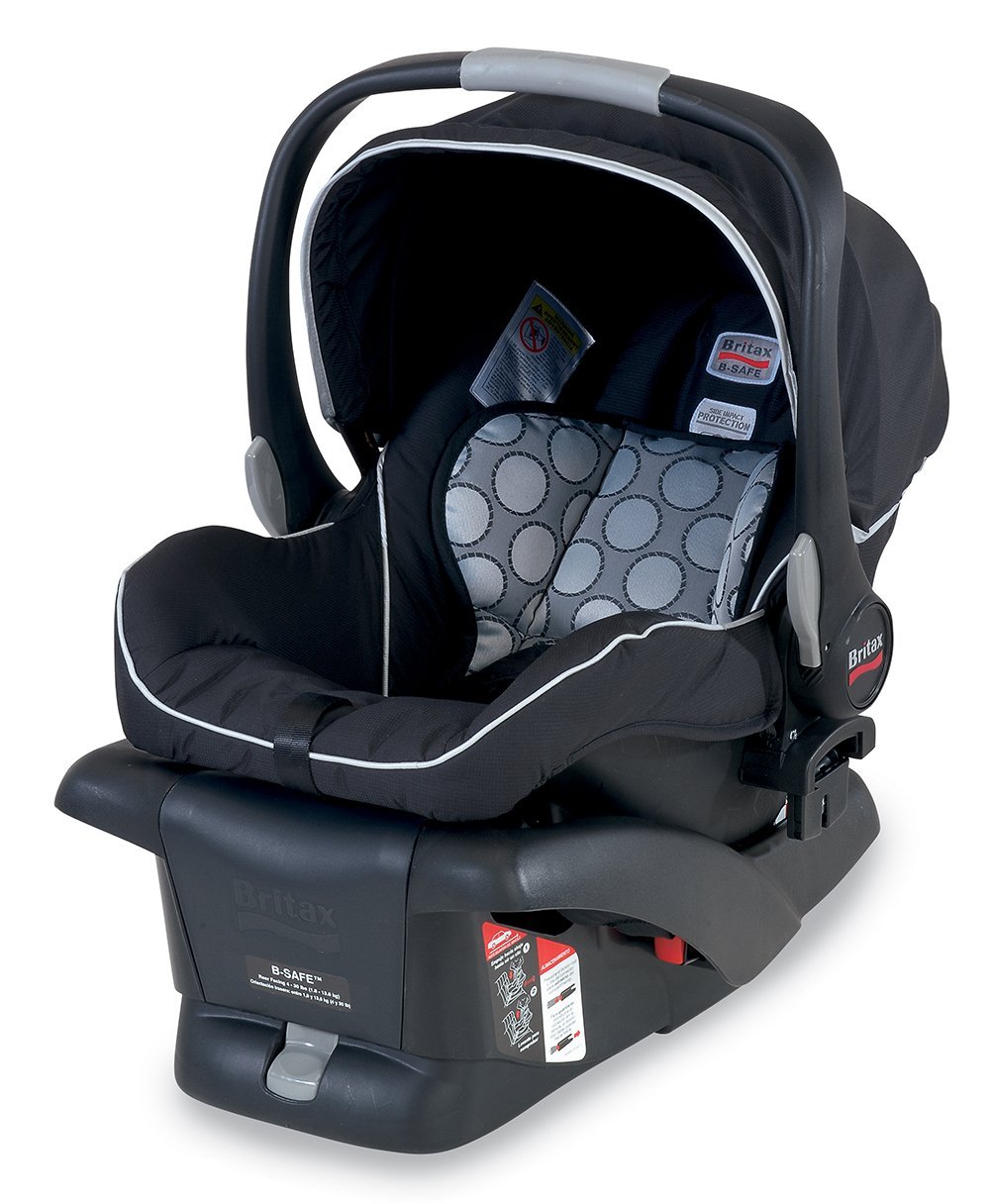
It sounds like I’m sold on the convertible, but even though newborns technically will fit in those giant seats, I just feel like the snug fit of the infant seat is a safer bet when they’re tiny. So I’m leaning toward getting a more affordable, no frills infant seat and upgrading to the fancy convertible I want when he’s 9-12 months. Unfortunately, I’m not thrilled with the bare bones safety and usability ratings on most of the economy infant seats, so I’m leaning toward a middle-of-the-pack seat with excellent safety ratings that’s short on extra features (the Britax B-Safe seat, which currently sells for about $135). It’s about $50 less expensive than the KeyFit with similar safety and ease-of-use ratings.
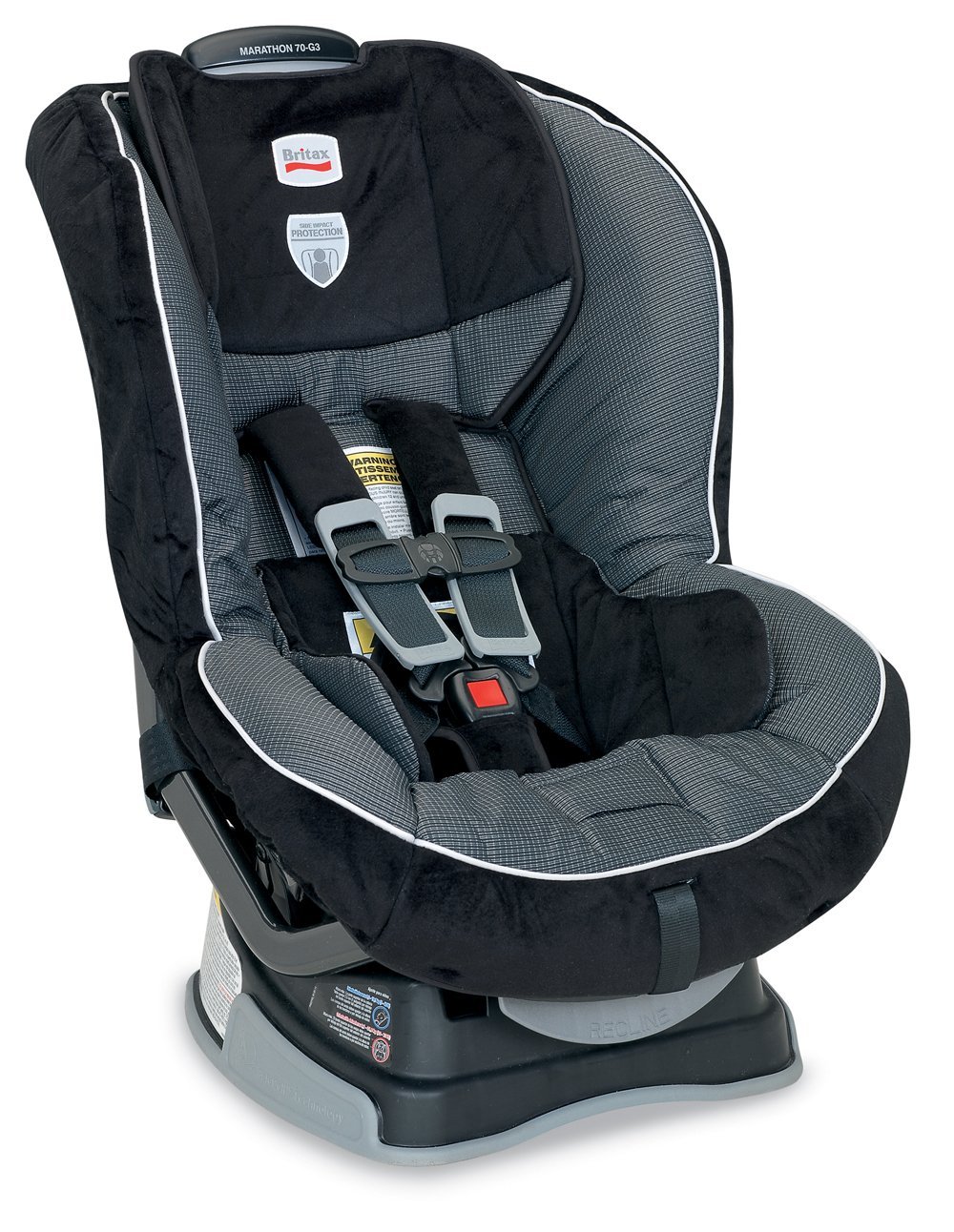
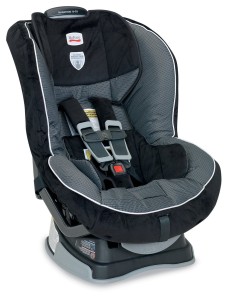 Eventually, I’ll move him into the Britax Marathon 70 G3. Judah has the Britax Roundabout 55, which is a great seat for the price, and I love it. My only big complaint is that the entire seat has to be uninstalled and the straps have to be completely removed to adjust them or wash the seat cover. This is a huge pain if you have a really messy kid (or one who gags and pukes a lot, ahem). The Marathon is similar with a few extra features and upgrades, and an easy-to-remove cover and no rethread harness adjustments. (Like the Roundabout, it will allow baby to rear-face up to 40 pounds, which is very important now that rear-facing is recommended to at least 2 years old! We just turned Judah forward-facing at 2 years and 8 months, and we plan on rear facing as long as possible with his brother, too.)
I’m also considering a few new purchases for items I used heavily with Judah that were given to me secondhand. Most notably, I’d like to replace the swing that was given to me by my sister. It’s a 5- or 6-yearold Graco Cradle n Swing that has been used by four babies including Judah. It’s powered by an AC adapter instead of millions of batteries, so replacing it won’t be cheap, but with so little to buy, I think it might be a good investment. Plus I’ll be able to resell it for a good price when the baby outgrows it.
Beyond that, I just need to clean, clean, clean and organize. I usually run a pretty tight ship when it comes to tidiness, but I’m a crappy housekeeper when I’m pregnant. A lot of clutter and messiness has built up over the past 7 months (almost a year if you include my last pregnancy and miscarriage recovery). Plus, our 1970s ranch is small with very little storage. It’s going to take some serious purging and Tetris-style reorganizing to fit a whole new person and all his stuff into this house.
How did you prepare for your second (or third or fourth) baby?
*All product links are Amazon Associates links, which means I earn a small commission if you purchase a product after following my link.
All photos courtesy of Amazon.com.
 Oh, summer. I have made no secret about the fact that it’s not my personal favorite time of year. Southern Indiana turns into a swamp in July. But I am determined to make the most of summer this year, so I’ve spent some time compiling a list of activities to fill up our schedule without draining my wallet.